
Build an Affordable Roster: Contracts and Budgeting
Updated · 1.2.1 Beta preview (source reviewed)
Mechanics checked against the 1.2.1 Beta preview source on 7 July 2026. Public and older builds can differ; use the values in your own save. Screenshots show earlier beta interfaces and may differ in appearance.
Which contract can my federation afford?
Compare the total commitment over the period you intend to use the wrestler. A lower headline number is not necessarily the cheaper deal. Offers depend on the wrestler and the state of the save, so these examples use invented prices to demonstrate the calculation rather than quote a guaranteed market rate.
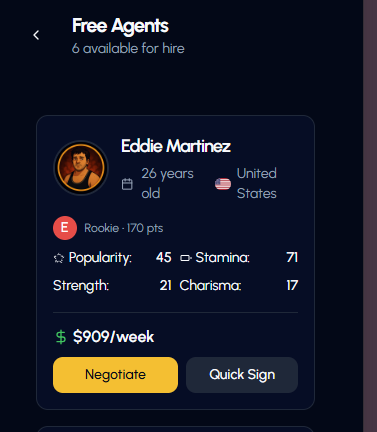
Decide what the wrestler will do
Write down a role: regular main eventer, reliable weekly opponent, occasional attraction or prospect to develop. Estimate how often you expect to book them. Check skills for that role as well as popularity and stamina. A roster with expensive attractions but too few affordable opponents can be difficult to use consistently.
Browse the wrestler database to compare identities and skills, then use the live contract screen for the actual asking terms.
Compare like with like
Suppose one offer costs 500 per week and another costs 900 per appearance. Assume four weeks, no signing bonus and no other charges just for this example.
| Intended use | Weekly deal | Appearance deal |
|---|---|---|
| One appearance | 2,000 | 900 |
| Two appearances | 2,000 | 1,800 |
| Four appearances | 2,000 | 3,600 |
The weekly deal becomes cheaper in this simplified comparison when you use the wrestler frequently. The appearance deal preserves cash when you only need an occasional match. Actual contracts can include bonuses, limits and other commitments, so add those before deciding.
Read the whole offer
Check duration, remaining appearances where applicable, signing payments and promises. Weekly payroll continues even if you leave a wrestler off a card. Per-appearance spending depends on how you actually book talent, so look at the complete show rather than multiplying one attractive fee in isolation.
Avoid spending your entire balance on signing day. A roster still needs a venue and show budget. Keep enough room for the next settlement and an alternative plan if the next show's revenue disappoints.
Build a roster budget
For an illustrative six-person roster, suppose the total weekly salary is 3,000. Four weeks of payroll is 12,000 before venues, staff, production, appearances or recruitment costs. If only 15,000 remains after signings, the nominal three-thousand gap is not a complete operating reserve.
Use the finance projection to add the other commitments. If the plan is unaffordable, reduce guaranteed contracts, choose less costly candidates, or postpone the signing. Do not assume the next event will pay for every new commitment.
Plan renewals and replacements
Review expiration information each week. A programme that depends on a wrestler should not outlast the agreement without a renewal plan. Keep an alternative opponent in mind and check the negotiation response rather than assuming every offer will be accepted.
Training and injuries also affect who can fill the next card. Depth has value, but paying people with no planned use has a cost. Revisit each role as your promotion grows.
Common mistakes
Do not compare a weekly rate with a full-contract total, omit a signing bonus from the cash calculation, or assume category tells you everything about value. Compare actual skills for the task and actual costs for the schedule.
Next, read weekly finance and cash flow, match-rating inputs, and your first-show walkthrough.